Stand on a high-rise terrace in Whitefield or drive along the Outer Ring Road at sunset, and Bengaluru looks spectacular. The “Silicon Valley of India” glitters with ambition, its skyline defined by sleek steel and vast expanses of mirrored glass. It is a long way from the quaint “Garden City” of pensioners’ bungalows hidden behind dense jackfruit and mango trees.
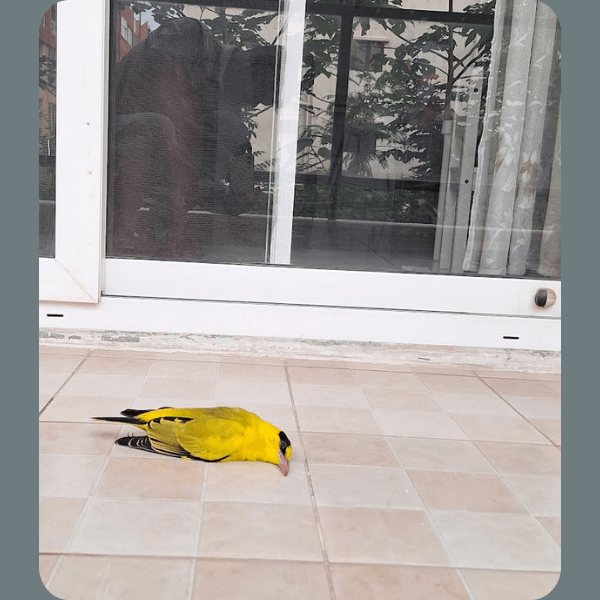
We take pride in this modern, vertical growth. But there is a silent, devastating crisis happening right against these shining facades. It’s a sound many of us have heard, perhaps while sitting at our office desk or drinking coffee on a balcony: a sudden, sickening thud against the window, followed by silence.
This isn’t just an occasional accident. Across Bengaluru, from the glass-fronted offices of EcoSpace to the transparent balcony barriers in Indiranagar, glass buildings have become one of the most significant, yet overlooked, man-made killers of our urban wildlife.
The Deep Dive: A Sensory Trap in the Concrete Jungle
Why is this happening now, and why so intensely in Bengaluru? The answer lies in the friction between our biology and our architecture.
Birds do not perceive glass the way humans do. We understand architectural cues—frames, door handles, mullions—that tell us, “This is a barrier.” Birds, however, evolved in a world without invisible walls. To a bird moving at speed, a reflective glass window isn’t a building; it is a continuation of the sky or a perfect reflection of the inviting Rain Tree standing next to it.
The “Illusion” Architecture Modern Bengaluru architecture favors seamless corner windows and highly reflective “glazing” to keep buildings cool. These create perfect illusion traps. Furthermore, as we fragment our green corridors—leaving patches of trees near lakes like Kaikondrahalli or Sankey adjacent to glass towers—we force birds to navigate dangerous “canyons” of reflection to find food.
The Impact: Shattered Wings and Silent Springs
Glass collisions don’t just kill “city pigeons.” They disproportionately harm the weary travellers and the energetic pest-controllers that keep our ecosystem functioning.
1. The Migrants (The Tired Travellers) Bengaluru sits squarely on the Central Asian Flyway. Every winter, millions of birds pass through. Species like the colorful Indian Pitta (Navrang), the Blyth’s Reed Warbler, and the Indian Paradise Flycatcher often migrate at night. Confused by the skyglow of tech parks, they descend into the city, only to collide with glass facades at dawn while foraging.
2. The Residents (The Pest Controllers and the Pollinators) Small, passerine birds like the Oriental White-eye, Purple-rumped Sunbird, and Common Tailorbird fly fast and low through gardens. They are experts at dodging branches, but they cannot dodge a reflection. Even raptors like the Shikra, chasing prey at high speed, fall victim to the transparency of corner windows.
3. Beyond Birds It isn’t just birds. The confusion extends to Fruit Bats navigating near lit windows at night, and large butterflies like the Blue Mormon, which often crash into reflective surfaces in garden compounds.
The Ripple Effect When we lose these species to collisions, the effects unravel the ecosystem. Fewer insectivores mean more mosquitoes and garden pests. Fewer sunbirds mean reduced pollination for our flowering trees. A silent garden is often the sign of a dangerous neighbourhood.
Community Action Plan: Making the Invisible, Visible
The good news is that this is a design flaw we can fix. We don’t need to tear down buildings; we just need to help birds “see” them.
-
Break the Reflection (The 2×4 Rule): The most effective solution is to apply patterns to the outside of the glass. Birds will try to fly through gaps that look large enough. A good rule of thumb is that patterns (dots, stripes, decals) should be spaced no more than 2 inches apart vertically or 4 inches horizontally. You can use UV-reflective decals, tape, or even tempera paint for a temporary fix during migration.
-
RWA Policy: “Lights Out”: Migratory birds are drawn to light. RWAs and commercial buildings should implement “Lights Out” programs, turning off decorative façade lighting and encouraging residents to draw curtains between 11 PM and 6 AM during peak migration months (October–November and March–April).
-
Advocate for Bird-Friendly Design: If you are part of an RWA or planning body, push for “Bird-Safe” architecture in new constructions. This includes using angled glass, external screens/louvers, or matte-finish cladding. These features don’t block light, but they break the deadly reflection.
-
Citizen Science: We need data to push for policy change. If you find a bird stunned or killed by a window, document it. Upload the photo and location to iNaturalist or the India Biodiversity Portal.
Conclusion
The glitter of Bengaluru’s skyline doesn’t have to come at the cost of its biodiversity. We are a city known for technological solutions; surely, we can solve the low-tech problem of visible glass. By making small changes to our homes and offices, we can ensure that the Garden City remains a safe haven for its winged residents, allowing them to navigate our shared urban space without fear of the invisible wall.
Leave a Reply